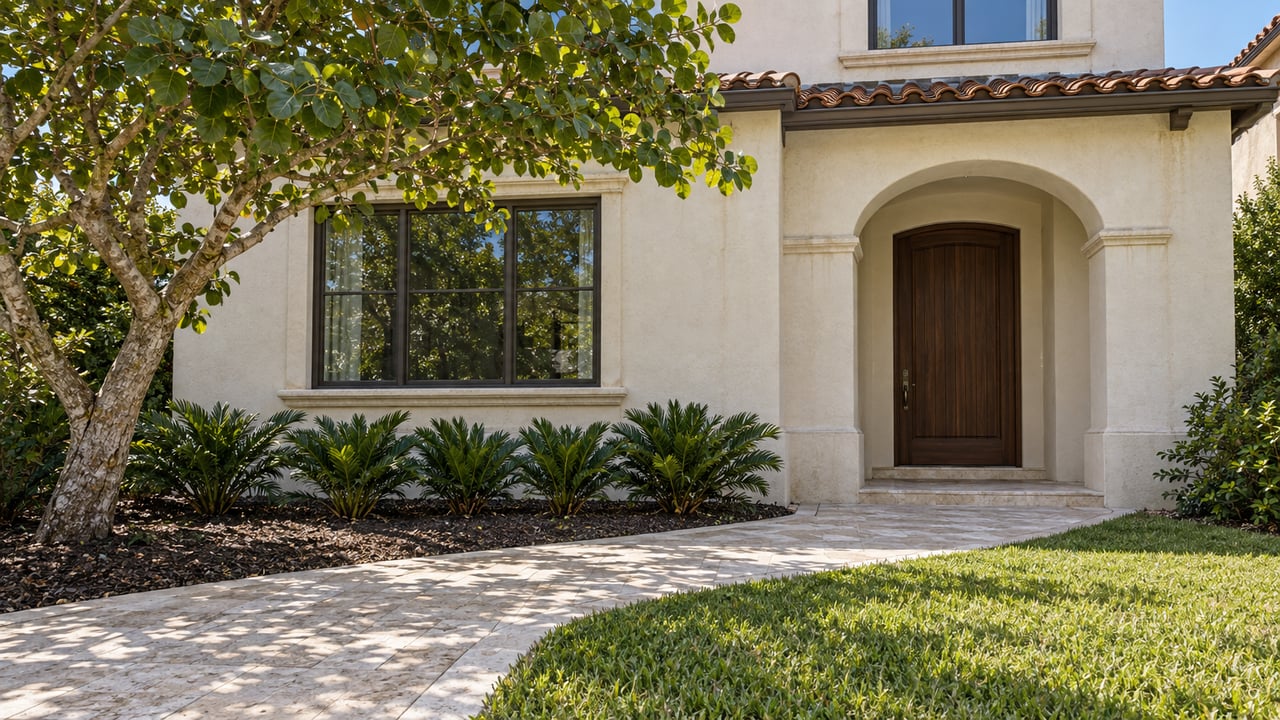
Evergrene's Closing-Day Check Tripled in 2026, and the Board Can Move It Again
October 8, 2026
October 8, 2026
"...not less than an amount equal to one (1) quarterly assessment nor more than four (4) quarterly assessments for the year in which the new Owner acquired title."
That clause comes from an amendment to Section 9.9 of the Evergrene community's Declaration of Covenants, executed on October 23, 2024. It changed the cost of buying a home in this Palm Beach Gardens community. Before, the payment due from a new owner at closing was set as one-fourth of the annual assessment. Now it is a range the Board of Directors chooses. Starting in February 2026, the Board set it at three-quarters of the property's annual assessment.
Three-quarters of an annual assessment equals three quarterly assessments, so the 2026 rate is three times the old one-quarter figure. The amendment lets the Board go as high as four quarterly assessments, which is a full year's assessment. The listing price doesn't show this number. Neither does the monthly fee a buyer hears about early on. Buyers and sellers in Evergrene are now negotiating around a closing cost set by a board vote that can change on a schedule.
The Evergrene Master Association does not publish a dollar amount for the capital contribution. Its requirements page defines it only as a share of "that property's Annual Assessment" and says the contribution is shown on the estoppel. The 2026 assessment amount isn't posted on the association's public pages either. Homeowner information sits behind a members-only login.
So the contribution only becomes a number on the estoppel certificate, which the association issues to a title company or real estate attorney during closing. Any figure quoted before that document exists is an estimate.
The amendment also sets limits on how the number can change:
The 90-day rule helps anyone under contract. A change can't arrive without warning. A contract that closes early in a new calendar year can still land on a different rate than the one in place when the offer was signed. The fix is simple: before signing, ask the association whether notice of a new amount has gone out.
The language explains why the Board raised the rate. According to the association, the contribution goes to "the Capital Reserves of the Association." It is meant to fund "replacement and/or capital refurbishment" of the common areas and limited common areas, the surface water management system, and the parts of individual lots or units the association maintains. The Declaration adds that the money is "the exclusive property of the Association," and any reserve accounts must follow Florida law.
A buyer's closing payment goes straight into reserves for shared infrastructure, separate from regular dues. A higher contribution means each resale adds more to those reserves. The public materials don't disclose a reserve study or a list of planned projects. The current budget, the reserve study and recent board minutes are the documents that would show where the money is going. A buyer can ask for all three during due diligence.
The association's requirements page says the contribution applies to "each new homeowner" and also "when there is a change in title to a property." The amendment lists the transfers that don't trigger it:
The death exemption has a limit families should know about. It covers the transfer to heirs, but "any subsequent transfer of title by the heirs or Estate of the Owner(s) is subject to the capital contribution." When an inherited Evergrene home is sold, the buyer's closing includes the contribution like any other resale.
The definition of "immediate family" is also narrow. It covers the owner's spouse, parents, brothers, sisters and children. It also covers an unmarried significant other who lived in the unit with the owner for at least as long as the owner has lived there. A transfer to anyone outside that list is not exempt. Investors fall under the same rule. A purchase made to hold the home as a rental is a change in title, and the contribution applies.
The capital contribution is part of an approval process with its own timeline, and the estoppel is the step where the two connect. The association's posted requirements, worked backward from closing day, look like this:
A late start costs more. A rushed estoppel is $418, paid before processing begins, and takes three business days. If the estoppel fee becomes delinquent, the association adds $179. Since the capital contribution is shown on the estoppel, a delayed estoppel also means the buyer finds out the largest association charge late.
There is one more step after closing. The closing agent emails the executed warranty deed and settlement statement to Howard Slifkin at the association. Until the new owner is set up in the DwellingLive gate system, moving trucks are not allowed on the property and clubhouse access is denied. A buyer who books movers for the day after closing should confirm those documents have been sent.
A buyer who already owns a home in Evergrene and completed the General Application doesn't have to apply again. The association can transfer the application to the new home.
The Evergrene Mansions, the condominiums at odd and even addresses on Evergrene Parkway known as East and West, have their own association with separate steps. Buyers there file an extra application with Lang Property Management. The association names Crystal Sylvain, Leasing Administrator, as the contact. Estoppels for the Master Association cover "all addresses except for those on Evergrene Parkway." The East and West condo estoppels go through Lang's estoppel service and take three to 10 business days after the request form and check are received.
Evergrene's management page lists Campbell Property Management for the master association's single-family properties and Lang Property Management for the Mansions East and West. For a Mansions buyer, that means two sets of paperwork on two timelines. The public pages don't say how the capital contribution is shown for a Parkway address, so a Mansions buyer should ask both associations and read both estoppels.
The capital contribution is one of several association rules that affect what an Evergrene home is worth to an investor. Each property can be rented once per calendar year. The minimum lease is three months for a single-family home and four months in the Mansions. Vacation and short-term rentals are not allowed. An investor buying a rental will pay a contribution equal to three quarterly assessments at closing. That investor will also be limited to one tenant per year for a minimum term.
For sellers, the contribution changes the pricing conversation even though the association collects it from the buyer. A buyer comparing an Evergrene home with a similar home elsewhere is comparing total cash at closing. Under the 2026 rate, part of that cash goes to Evergrene's reserves. Sellers who know the amount early, from a recent assessment statement or from asking the association before listing, can answer the question before a buyer's attorney raises it. Whether a seller credit covers any of it is up to the buyer and seller to settle in the contract.
No. It is three-quarters of that property's Annual Assessment, so the dollar amount depends on the property. The estoppel for that property shows the figure.
The amendment allows up to four quarterly assessments. The Board can change the amount once per calendar year and must give members 90 days' notice.
No. The Declaration says capital contributions are not advance payments of assessments.
The City of Palm Beach Gardens' 2026 association directory, updated February 19, 2026, lists Evergrene Master Association, Inc. with President Steve Brodsky and property manager Celine Haber at 561-626-1981 ext. 234.
If you're selling in Evergrene, the capital contribution is one of the first questions a buyer's attorney will raise. At GulfStream Properties, we gather the assessment and contribution figures before your home lists, so buyers see the full closing cost from the first showing. Start with a free home valuation, and we'll include the association numbers with it.
This article is general information, not legal, tax or financial advice. Consult a qualified professional about your situation.
Stay up to date on the latest real estate trends.






Choosing Gulfstream Properties means choosing a boutique real estate experience where you are the priority. We pride ourselves on our deep local knowledge, our commitment to transparency, and our ability to anticipate and solve problems before they arise. From the first meeting to long after the keys are handed over, we are by your side, offering guidance, support, and expertise that goes far beyond the typical realtor-client relationship. Are you ready to experience the Gulfstream difference?
Get in Touch With Our Team to Learn More
GULFSTREAM PROPERTIES
4455 MILITARY TRL STE 202 JUPITER FL 33458