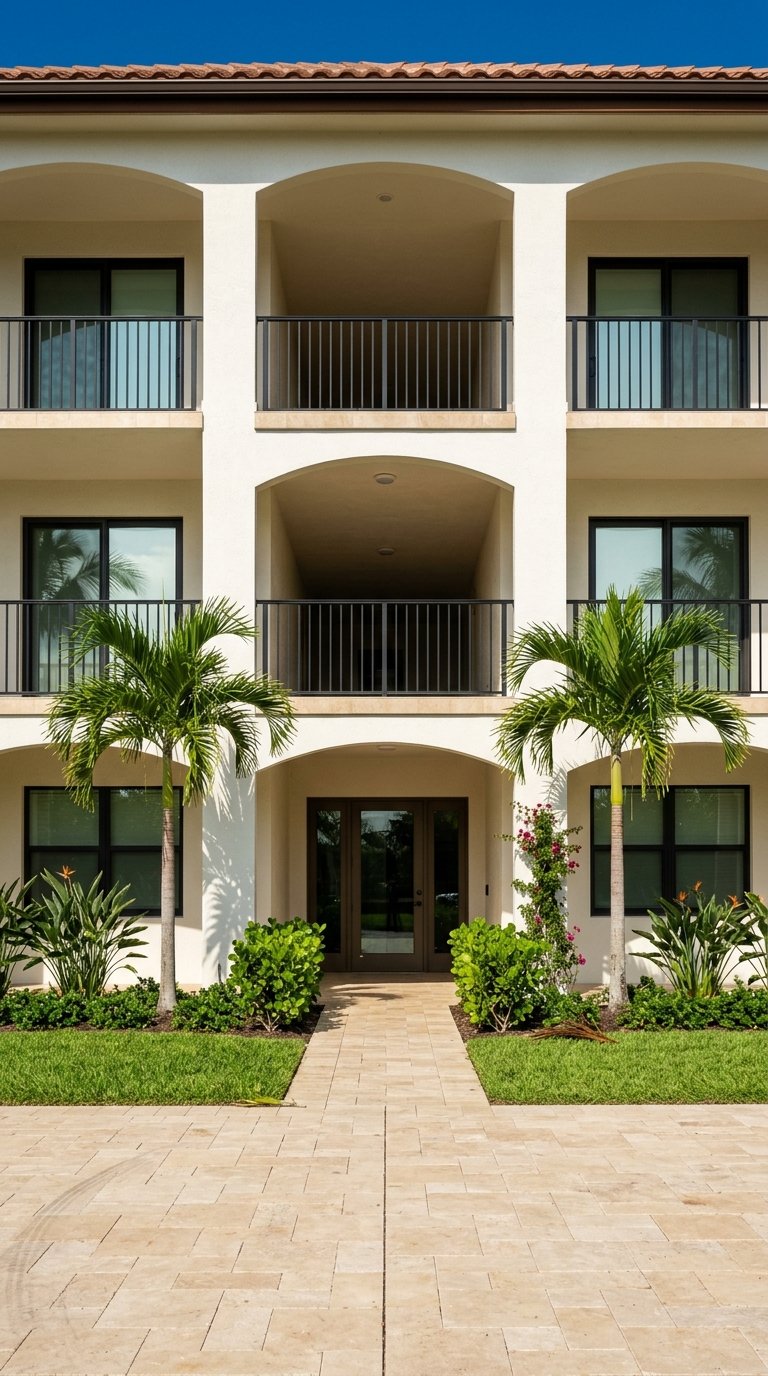
Juno Beach Condo Investment: What Smart Buyers Should Know
April 16, 2026
April 16, 2026
Wondering whether a Juno Beach condo is a smart investment? The short answer is yes, for the right buyer and the right building, but it is not usually a simple cash-flow story. If you are considering a condo here, you need to look beyond the view and ask how seasonality, HOA costs, rental rules, and building-specific restrictions affect your return. Let’s dive in.
Juno Beach offers something many coastal buyers want: a smaller-town beach setting in Northern Palm Beach County with limited commercial land and a strong seasonal draw. According to Census Reporter’s Juno Beach profile, the town has fewer than 4,000 residents, and town reporting says the population can nearly triple from November through April.
That seasonal pattern matters if you are buying with income in mind. More winter residents and visitors can support higher demand during peak months, but it also means year-round rental depth may be less consistent than in larger markets. In other words, Juno Beach tends to fit buyers looking for a lifestyle asset with added income potential, not just an investment spreadsheet.
The pricing picture is mixed, which makes careful analysis especially important. Zillow’s home value data for Juno Beach showed a typical home value of $805,871 as of February 28, 2026, down 5.6% year over year. At the same time, Redfin reported a February 2026 median sale price of $877,500, up 8.7% year over year, with 96 median days on market and a 93% sale-to-list ratio, while Realtor.com described the town as a buyer’s market with 219 homes for sale.
For you as an investor, that means leverage may come from selective buying rather than broad market momentum. A buyer-favored market can create negotiating opportunities, especially if a listing has been sitting or if a seller is factoring in building-related costs. It also reinforces the value of underwriting each condo individually instead of assuming all ocean-close units perform the same way.
Juno Beach sits in a middle price band among nearby coastal markets. Zillow’s Jupiter home value page placed Jupiter at $688,610, while Palm Beach was far higher at more than $2 million, according to the same market snapshot source cited in the research report.
That middle position can be attractive if you want beach access and a smaller-town setting without stepping into Palm Beach pricing. It does not automatically make Juno Beach a bargain, but it can make it a more attainable coastal option for second-home buyers and seasonal investors.
If your goal is rental income, Juno Beach’s demand story is heavily tied to seasonality. The town’s seasonal population jump aligns with wider tourism strength in Palm Beach County, where county reporting showed 9.62 million visitors in FY 2023/24 and $7.15 billion in tourist spending, based on the town CAFR attachment in the research report.
Rental data also points to meaningful demand, even if the market is fragmented. Zillow’s Juno Beach rental market trends showed an average rent of $5,800, with notable variation by unit type, while Realtor.com reported 76 rentals in town and some condo communities with more rentals than active sales listings.
Juno Beach is not a large apartment market, so broad rental averages only tell part of the story. RentCafe’s Juno Beach market page lists average rent as not available because its methodology focuses on apartment buildings with 50 or more units.
That suggests much of the rental inventory is likely condo-based or seasonal rather than concentrated in large apartment communities. For you, that means the income potential of a specific condo will depend more on that building’s rules, layout, fees, and seasonal demand than on citywide apartment averages.
This is one of the biggest factors in whether a Juno Beach condo is truly a smart investment. In Florida, condo associations have broad authority over common elements, assessments, and restrictions under Chapter 718 of the Florida Statutes. That means your net return is shaped not just by rent, but by dues, reserves, insurance costs, and possible special assessments.
Sample Juno Beach listings show just how wide those costs can be. The research report cites one condo with a $347 monthly HOA fee and another oceanfront unit with $1,844 per month in HOA fees, plus reserve funding. Another listing at the same address showed HOA-related charges, reserves, and a pool-deck special assessment totaling $7,978.07, along with approval requirements for buyers and tenants.
Before you make an offer, review the building’s financial and operational details carefully. Focus on:
A condo with strong seasonal rent potential can still underperform if fees are too high or if building restrictions reduce flexibility. This is why two similar-looking units in Juno Beach can have very different investment outcomes.
Juno Beach appears to regulate short-term or vacation rentals rather than ban them. Under the town’s vacation rental ordinance, a vacation rental is generally a unit rented more than three times in a calendar year for periods of less than 30 days or one calendar month, whichever is less, or one that is advertised as such.
If you plan to rent on a short-term basis, the town requires registration and supporting documentation. That includes a business tax receipt, DBPR license, Florida Department of Revenue registration, Palm Beach County tourist-tax account proof, a sample lease, and a designated responsible party. Renewals are due annually by October 1.
The ordinance also requires a written or online lease agreement, limits occupancy to two persons per bedroom plus two, requires a 24/7 responsible party who can respond within two hours if needed, and mandates certain postings inside the unit. Violations can be enforced as separate daily offenses.
Just as important, building rules may be even more restrictive than town rules. The research report notes that condo declarations can limit use, occupancy, transfers, tenant approvals, lease terms, rental caps, and waiting periods. So even if the town allows a rental use, the condo association may not.
If you are projecting rental income, do not overlook transient rental taxes. The Florida Department of Revenue guide says condo units rented for six months or less are generally subject to a 6% state sales tax plus any applicable surtax. Palm Beach County also imposes a 6% tourist development tax on accommodations, including condominiums, rented for six months or less.
Leases longer than six months are exempt from those transient rental taxes. That can create a very different return profile between a seasonal rental strategy and a longer-term lease strategy. You should model both before deciding what kind of investment approach makes the most sense.
As of 2026, older condo buildings in Florida require more careful review. Under Florida’s milestone inspection law, buildings that are three habitable stories or higher must undergo milestone inspections, and condo associations must complete structural integrity reserve studies every 10 years. Sale contracts entered after December 31, 2024 also require disclosure if required milestone inspections or reserve studies are incomplete.
For coastal buildings, this deserves extra attention. The law allows local enforcement agencies in salt-water areas to require the first inspection at age 25, which can be especially relevant in an oceanfront market like Juno Beach.
When you review a building, ask for clarity on:
These issues may not show up in a simple online search, but they can have a major effect on your ownership costs and future resale value.
For many buyers, yes, but with the right expectations. Juno Beach condos can make sense if you want a coastal property that offers personal enjoyment, seasonal rental potential, and a location that sits between Jupiter and Palm Beach on price. They are often less compelling if your only goal is strong immediate cash flow.
That is because the market remains expensive, inventory conditions appear more favorable to buyers, rental demand is seasonal, and HOA fees, taxes, inspections, and association rules can materially affect your bottom line. In short, the smartest Juno Beach condo investment is usually the one you buy after careful building-level due diligence, not the one with the best photos.
If you are weighing a Juno Beach condo purchase, Gulfstream Properties can help you compare buildings, review local market positioning, and understand how ownership costs may affect your long-term strategy.
Stay up to date on the latest real estate trends.

Choosing Gulfstream Properties means choosing a boutique real estate experience where you are the priority. We pride ourselves on our deep local knowledge, our commitment to transparency, and our ability to anticipate and solve problems before they arise. From the first meeting to long after the keys are handed over, we are by your side, offering guidance, support, and expertise that goes far beyond the typical realtor-client relationship. Are you ready to experience the Gulfstream difference?
Get in Touch With Our Team to Learn More
GULFSTREAM PROPERTIES
4455 MILITARY TRL STE 202 JUPITER FL 33458